Septum Piercing:
The Complete Guide to Pain, Cost & Healing
A septum piercing sits right in the center of your face, which sounds like it should make it one of the boldest, most permanent decisions you can make with a needle. In practice, it’s often the opposite: quick to heal, easy to hide, and — done right — barely painful at all.
That contradiction is exactly why so many people start researching septum piercings and end up more confused than when they started. Search around and you’ll find wildly different answers about how much it hurts, how long it takes to heal, and whether it even goes through cartilage. Some of that comes from people who were pierced badly comparing notes with people who weren’t. Some of it comes from guides that skip the details that actually matter.
This guide pulls it all together in the order you’ll actually need it: what a septum piercing really is, what it costs, what the pain and healing process genuinely feel like, and how to choose jewelry that works for your face, your job, and your life.
A septum piercing goes through the “sweet spot,” a thin strip of soft tissue at the front of the nasal septum — not through cartilage, in most cases. It typically takes 6–8 weeks to feel healed on the surface and several months to fully heal internally, and costs $30–$100 on average.

Septum Piercing: Fast Facts Snapshot
Quick Reference| Detail | Typical Answer |
|---|---|
| Average Pain Rating | 3–4 out of 10 for sweet-spot placements |
| Piercing Location | Soft tissue “sweet spot,” not cartilage, in most anatomies |
| Average Cost | $30–$100 (piercing service only) |
| Standard Starting Gauge | 14g–16g |
| Surface Healing Time | 6–8 weeks |
| Full Internal Healing Time | 3–12 months |
| Common Starter Jewelry | Circular barbell or horseshoe |
| Safe Jewelry Materials | Implant-grade titanium, surgical steel, niobium, solid 14k/18k gold |
| Can It Be Hidden? | Yes — flips up into the nostril, or use a clear retainer |
| Leaves a Scar If Removed? | Typically no |
| Rejection Risk | Low compared to surface piercings |
| Best Aftercare Product | Sterile saline solution, 1–2x daily |
10 Septum Piercing Facts Most Guides Leave Out
Did You Know?What Is a Septum Piercing, Exactly?
Your septum is the wall of cartilage running down the center of your nose, separating your left and right nostrils. A septum piercing sits at the front of that structure, and here’s the part most people get wrong: in the large majority of cases, it doesn’t go through the cartilage itself.
Instead, a trained piercer targets a thin, soft strip of tissue that sits just in front of the cartilage — commonly called the “sweet spot.” It’s the same tissue you can feel if you gently pinch the very tip of your septum between two fingers; you’ll notice it’s thinner and more pliable than the firmer cartilage behind it. Piercing through this tissue is faster to heal, less painful, and gives the jewelry a natural place to sit and rotate.
The Sweet Spot, and What Happens If You Don’t Have One
Not everyone’s anatomy has an obvious sweet spot. In some people, the cartilage extends further forward, leaving little to no soft tissue to work with. If that’s the case, a responsible piercer will tell you before they pierce — not after — because piercing through cartilage instead of soft tissue changes the pain level, the healing time, and the aftercare required.
This is the single best reason to have your anatomy checked in person rather than booking based on a friend’s experience. Two people can want the exact same piercing and end up with two very different processes, simply because of how their nose is built.
Explore Our Complete Guides
Nine in-depth resources covering every aspect of septum piercings
Septum Piercing Basics
The complete beginner’s guide – anatomy, definition, and getting started.
Explore →Pain, Healing & Aftercare
What to expect and how to care for your piercing at every stage.
Explore →Jewelry & Gauge Guide
Rings, clickers, materials, gauges, and how to choose the right one.
Explore →Age, Safety & Special Cases
Age rules, pregnancy, military policies, and medical considerations.
Explore →Does It Hurt? What the Pain Actually Feels Like
Septum piercing pain is one of the most inconsistent topics in the entire piercing world, and that’s mostly because people are describing different experiences without realizing it. Someone pierced cleanly through the sweet spot and someone pierced through cartilage are having two different procedures — but both walk away saying “I got my septum pierced,” and their pain reports end up in the same forum thread.
For a sweet-spot piercing, the most common description is a quick pinch or pressure, followed almost immediately by relief once the jewelry is in. Many people find the clamp or guide tool piercers use to line up the needle more uncomfortable than the needle itself. It’s also extremely common — and completely normal — for your eyes to water the moment the piercing happens. That’s a reflex tied to nerves in your nose, not a reliable sign of how much something hurts. Plenty of people tear up and immediately say it barely hurt.
If your anatomy requires a cartilage piercing, expect more pressure, a longer healing runway, and potentially more soreness in the days after. This is exactly why the anatomy check matters before you commit to a specific placement or jewelry style.
One more honest point: pain tolerance varies enormously between people, and a rushed or inexperienced piercer can make an easy piercing feel much worse than it needs to. The single biggest factor in your experience won’t be your pain tolerance — it’ll be whether you chose a piercer who does this often and does it carefully.
How Much Does a Septum Piercing Cost?
Pricing varies by studio, city, and jewelry choice, but septum piercings typically fall into a moderate price range compared to other facial piercings — generally somewhere in the range of $30 to $100 for the piercing service itself, with jewelry sometimes priced separately.
A few things move that number up or down:
Pro Tip: The cheapest option on a list isn’t the one to optimize for here. A poorly sterilized environment or a piercer who doesn’t check your anatomy first can cost you far more in time, pain, and potential complications than you’d save upfront.
Healing Timeline: What Actually Happens Week by Week
Septum piercings have a reputation for healing fast, and for sweet-spot piercings, that reputation is generally earned — but “fast” still means months, not days, and the timeline has stages worth understanding.
The First Few Days
Expect swelling, tenderness, and possibly minor bruising. The jewelry may feel tight while swelling peaks.
Swelling Subsides
Swelling largely resolves. Some crusting or discharge is normal – not a warning sign on its own.
Surface Feels Healed
Many piercers consider this the first jewelry-change window — but “feels healed” is not the same as “is healed.”
Full Internal Healing
Internal tissue continues strengthening. Wait up to a year before assuming it can handle rough treatment.
The practical takeaway: don’t judge your healing progress by how it feels alone. If you’re unsure whether you’re ready for a jewelry change, ask the piercer who did the work rather than guessing.
Normal vs. Concerning Healing Signs
Know the Difference| Symptom | Normal Healing | Needs a Doctor / Piercer |
|---|---|---|
| Redness | Mild, localized, fading over time | Spreading beyond the piercing site |
| Pain | Present early, decreasing week over week | Increasing after the first week |
| Discharge | Clear or white, light crusting | Thick, discolored, foul-smelling |
| Swelling | Peaks in first few days, then subsides | Persistent or worsening after a week |
| Smell | Faint, resolves with saline cleaning | Strong odor paired with other symptoms |
Septum Piercing Aftercare: How to Actually Clean It
Aftercare for a septum piercing is simpler than most people expect, and the biggest risk isn’t under-cleaning — it’s over-handling.
- Use a sterile saline solution (saltwater made specifically for piercing aftercare) once or twice a day. Spray or soak the area, then let it air dry rather than wiping it dry with a towel.
- Leave the jewelry alone. Twisting, rotating, or repeatedly checking it with your fingers introduces bacteria and irritates healing tissue.
- Skip anything beyond saline — no soap directly on the piercing, no alcohol, and no tea tree oil, which is a common but genuinely damaging addition to piercing aftercare routines.
- Avoid submerging the piercing in pools, hot tubs, or natural bodies of water while it’s healing, since these environments carry more bacteria than a clean shower.
Mild crusting, occasional light discharge, and some tenderness are all normal parts of healing. What’s not normal: spreading redness, increasing pain after the first week rather than decreasing, or a foul-smelling discharge that doesn’t clear up with regular saline care. If you notice any of those, that’s a conversation for your piercer or a doctor, not a forum thread.
Septum Jewelry 101: Styles, Materials & Sizes
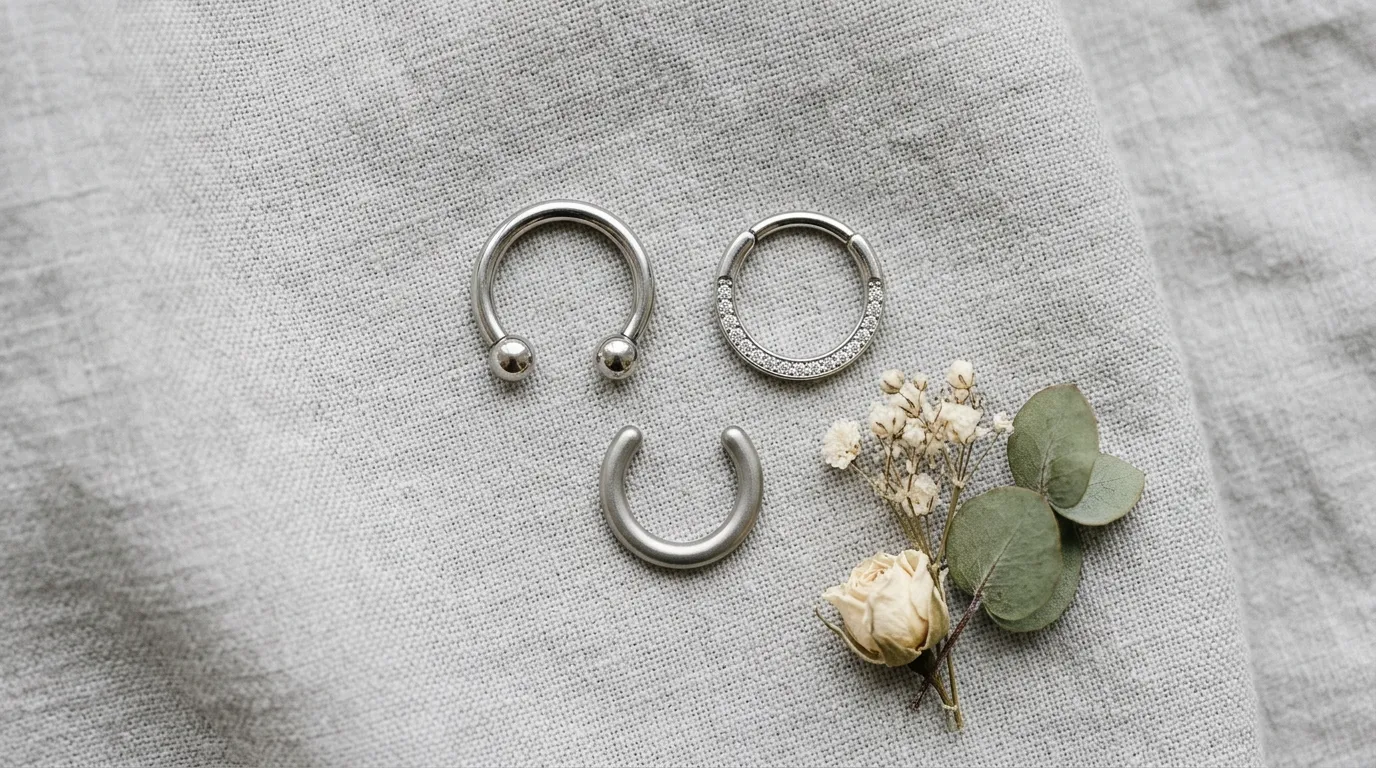
Septum piercings support a wider range of jewelry styles than almost any other facial piercing, which is part of why they’ve stayed popular — the same piercing can look completely different depending on what’s in it.
Common Jewelry Styles
Materials That Are Actually Safe to Heal With
Not all jewelry sold as “septum rings” is appropriate for a fresh piercing. During healing, stick to implant-grade titanium, surgical steel, niobium, or solid 14k/18k gold. These materials are far less likely to cause irritation or a reaction than plated jewelry or lower-grade alloys, which can flake or contain nickel.
Gauge Sizes, Explained Simply
Gauge refers to the thickness of the jewelry, and the numbering is backward from what most people expect: a smaller gauge number means thicker jewelry. Most septum piercings start at a standard gauge chosen by the studio (commonly in the 14g–16g range), and stretching to a thicker gauge is something to consider only after the piercing is fully healed — not before.
Jewelry Style Comparison Table
Compare Styles| Style | Best For | Ease of Hiding | Healing-Stage Friendly? |
|---|---|---|---|
| Circular Barbell | First-time wearers, daily flipping | Easy | Yes |
| Horseshoe | Simple, low-profile look | Easy | Yes |
| Septum Clicker | Decorative, statement looks | Moderate | After healing |
| Seamless Ring | Clean, minimal aesthetic | Harder | After healing |
| Clear Retainer | Work, school, concealment | Very easy | Yes |
How to Hide a Septum Piercing (and When You Can’t Yet)
One of the most practical advantages of a septum piercing is that circular barbells and horseshoes can be flipped up into the nostril, tucking the jewelry out of sight without removing it. This is what makes the piercing workable for jobs, formal events, or family visits where visible jewelry isn’t welcome.
Early in healing, flipping the jewelry can be uncomfortable and should be done gently, ideally after cleaning so any dried discharge doesn’t catch on the way up. Doing it roughly, or before the swelling has gone down, can slow healing rather than speed up your ability to hide it. A clear retainer is a lower-friction option if you need to conceal the piercing frequently, especially once it’s further along in healing.
Common Problems and How to Handle Them
Most septum piercings heal without incident, but a few issues come up often enough to be worth knowing in advance.
Is a Septum Piercing Right for You?
A few things are worth weighing honestly before booking an appointment.
What a Septum Piercing Means (Briefly)
Septum piercings aren’t a modern invention — they’ve been part of body adornment traditions across a number of cultures for a very long time, long before they became a mainstream fashion choice in Western countries. Historical meanings have varied widely by community and era, from markers of status or rite of passage to purely aesthetic adornment.
Today, for most people getting one, the meaning is personal rather than tied to any single tradition — self-expression, style, or simply liking how it looks. If you’re curious about the deeper cultural and historical threads, that’s worth its own dedicated read rather than a rushed paragraph here.
The Bottom Line
A septum piercing has a reputation for being one of the more dramatic-looking piercings you can get, but the reality — done by a piercer who checks your anatomy first and uses safe jewelry — is a piercing that’s manageable to get, quick to heal for most people, easy to hide when you need to, and low-risk if you ever decide it’s not for you.
The details matter more than the headline pain or cost number. Get your anatomy checked, ask about jewelry material before you sit down, and give the healing process the months it actually needs rather than the weeks it looks like it needs.